
Creative Sponge Painting Tutorial: Creating Texture for Wall Decoration
Sponge painting is a simple, low-cost, and highly creative technique for adding texture and depth to walls. This method allows you to create unique, artistic designs without the need for professional skills.
Required Materials
Main Materials:
-
Acrylic paint or oil-based wall paint (preferably two or three shades from the same family or contrasting colors)
-
Natural sea sponge (best option) or synthetic sponge with coarse pores
-
Paint tray or disposable plate
-
Tracing paper or newspaper for testing patterns
Supplementary Materials:
-
Painter’s tape to protect baseboards and door frames
-
Cotton cloth for potential cleaning
-
Latex gloves
-
Palette (optional)
⭐ Step 1: Pattern Selection and Initial Practice
Types of Sponge Texture Techniques:
| Technique | Method | Final Effect |
|---|---|---|
| Layering Technique | Using two or three colors in layers (light to dark) | 3D depth and natural look |
| Cloud and Wind Technique | Gently twisting the sponge on the wall | Soft, cloud-like pattern |
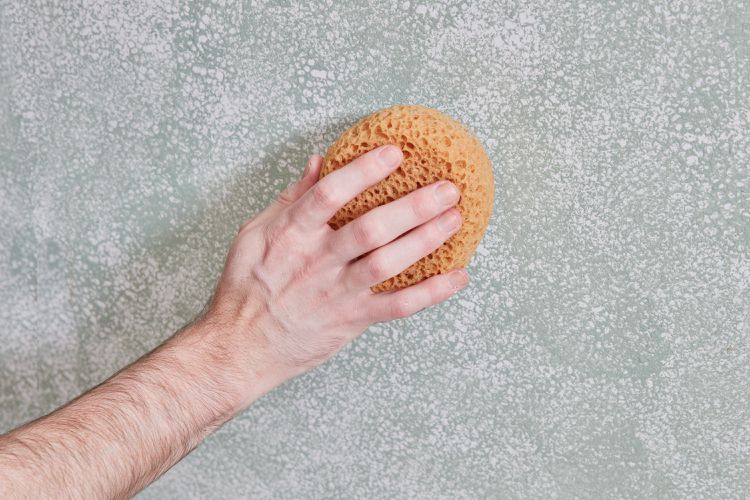
| Pebble Technique | Short, repeated dabbing | Stone or orange peel texture |
| Combined Technique | Combining sponge with brush for details | Abstract and artistic designs |
Pre-Work Practice:
-
Test the sponge pressure and pattern density on paper or a practice board.
-
Adjust the spacing between dabs (close spacing = dense coverage, wider spacing = more open pattern).
⭐ Step 2: Wall Preparation
-
Clean the wall: Remove any grease and dust with a mild solution.
-
Base coat: Paint the wall with a base color (preferably matte). This will typically be the lightest color in your palette.
-
Complete drying: Allow the base coat to dry completely for at least 24 hours.
-
Protect the area: Surround the work area with painter’s tape and newspaper.
⭐ Step 3: Cutting and Preparing the Sponge
Proper Sponge Cutting Method:
-
Cut natural sponge into several pieces of different sizes and shapes (square, rectangle, triangle).
-
To create varied textures, you can cut the sponge edges jagged or curved.
-
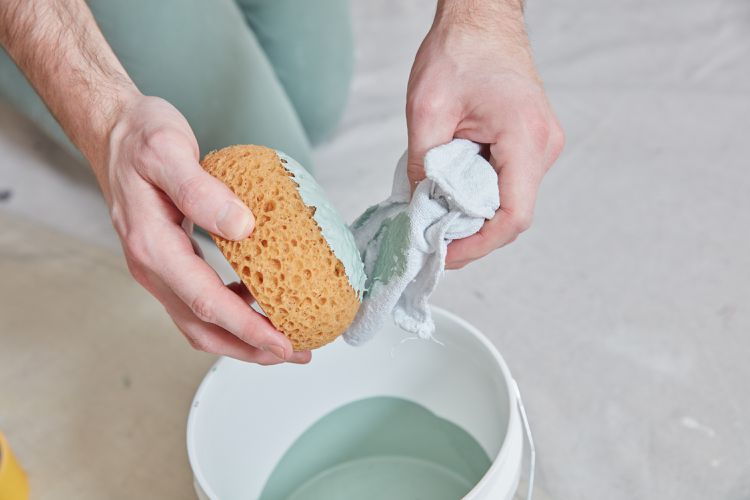
Slightly moisten the sponge, then wring out excess water (damp sponge, not wet).
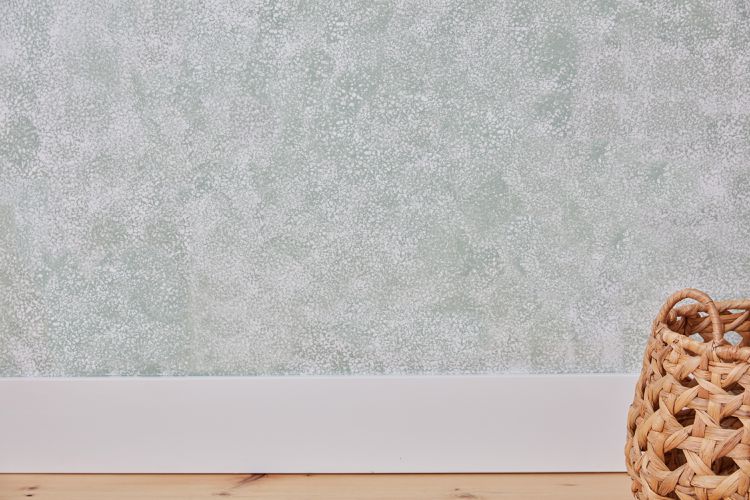
⭐ Step 4: Main Technique Execution (Step-by-Step)
Standard Application Method:
Step 1: Loading the Sponge
-
Pour a small amount of paint into the tray.
-
Lightly dip the sponge into the paint (do not soak).
-
Dab the sponge on tracing paper to remove excess paint.
Step 2: Starting on the Wall
-
Begin in a less visible corner (behind a door).
-
Apply the sponge to the wall with gentle twisting motions or soft dabbing.
-
Golden Rule: Maintain spacing between dabs and create random patterns.
Step 3: Creating Depth with Color Layers
-
Apply the first layer with the lightest color and let it dry.
-
Apply the second layer with the medium color, using less density.
-
Optionally add a third layer with the darkest color as accent points only.
⭐ Step 5: Professional Tricks for Stunning Results
1. “Wet-on-Wet” Sponge Technique:
-
Place two different colors simultaneously on the sponge.
-
The colors will blend during application, creating a natural watercolor effect.
2. Creating Color Gradients:
-
Work from top to bottom, moving from dark to light colors.
-
Use a clean, damp sponge to blend the boundaries between colors.
3. Combining with Other Techniques:
-
Sponge + Putty Knife: For creating sharp lines and textures.
-
Sponge + Cloth: For softening edges and creating smooth effects.
4. Special Designs:
-
Cloud Design: Using blue, white, and gray colors.
-
Forest Design: Using green, brown, and yellow colors.
-
Galaxy Design: Using black, purple, and dark blue colors with splattered white paint.
⭐ Step 6: Troubleshooting Common Issues
| Issue | Cause | Solution |
|---|---|---|
| Excessive Blotching | Paint too thick or sponge overloaded | Remove excess paint on paper |
| Repetitive, Artificial Pattern | Regular, predictable dabbing | Maintain randomness, change dabbing direction |
| Paint Bleeding | Underlying layer not dry | Allow at least 6 hours between layers |
| Clear Boundaries Between Colors | No blending performed | Use a clean, damp sponge to blend edges |
Creative Ideas for Different Spaces
1. Children’s Room:
-
Sky blue wall with white sponge-painted clouds
-
Green grass at the bottom with animal designs
2. Living Room:
-
Neutral wall with gold or copper pebble texture
-
Abstract design with three shades of one color (e.g., gray)
3. Bedroom:
-
Colored wall with velvet effect (using very soft sponge)
-
Faded floral design in a corner
4. Bathroom:
-
Water bubble design with blue and green colors
-
Marble texture with white and gray colors
Final Tips for Success
-
Be Patient: Rushing is the enemy of this technique. Always allow complete drying between layers.
-
Less is More: Start with minimal paint; you can always add more.
-
Coordinate with Decor: Match colors with room furniture and curtains.
-
Final Test: After completion, view the work from a distance to check overall uniformity.
-
Final Protection: After complete drying (48 hours), you can apply a coat of matte varnish.
Conclusion
Sponge painting opens a door to personalized, budget-friendly decoration. With this simple technique, you transform not just your walls, but the very atmosphere of your living space. Be bold, experiment with unexpected color combinations, and enjoy the creative process. Every mistake can lead to discovering a new pattern!
Get Started: Take a piece of sponge today and create your first textured design on a small board.
